Admie: Greece–Cyprus electricity link is planned for completion by the end of 2031
The Greek operator’s 10-year development plan sets the date, a budget of about €1.94 billion, and an estimate that wholesale prices in Cyprus could fall by around 19%.
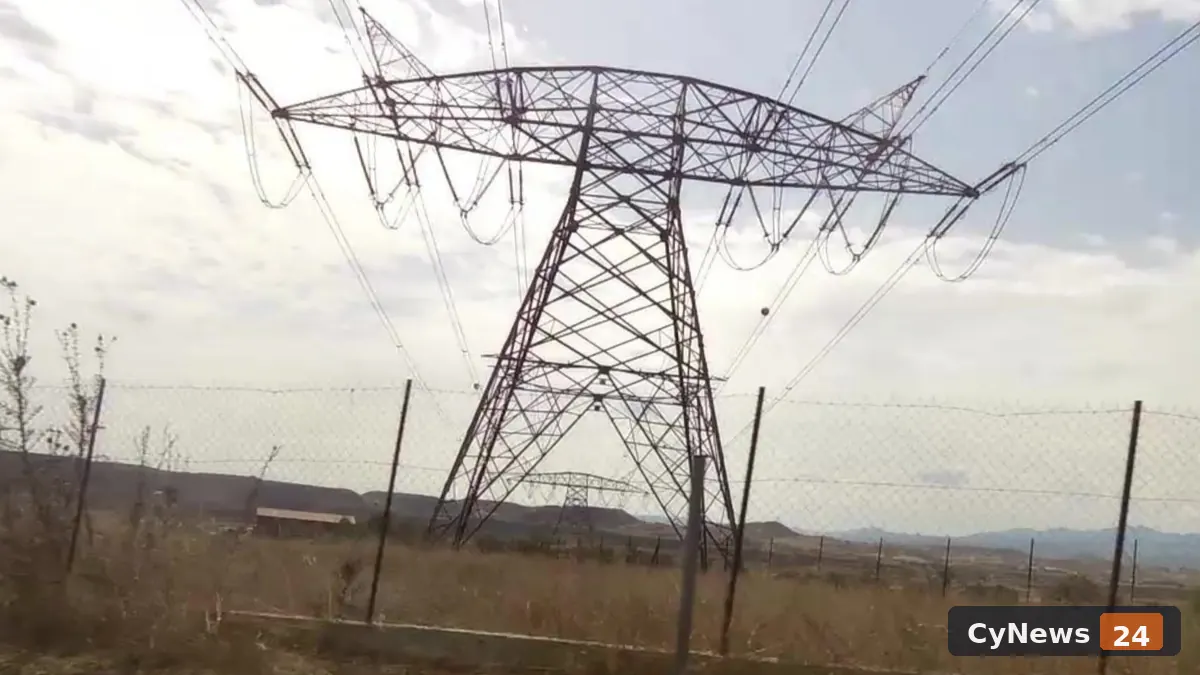
The section of the Great Sea Interconnector that will link the power grids of Cyprus and Greece is planned for completion by the end of 2031, Greece’s independent power transmission operator Admie said on Saturday.
Greek public broadcaster ERT, quoting the latest version of Admie’s 2027–2036 development plan, says the completion horizon for the Crete–Cyprus link is the end of 2031. The route is 898 kilometres long, with a capacity of 1,000 megawatts and a project budget of €1.94 billion. Of that, €657 million is covered by the European Union through the Connecting Europe Facility (CEF), as the interconnector has Project of Common Interest (PCI) status. Cyprus Mail reports the same completion date, citing ERT.
According to the same plan, ERT writes, a contract has already been signed for the cable section, which is under construction, 60% of the seabed surveys have been completed, and a preferred contractor has been selected to build the converter stations. The existing station at Damasta on Crete will be expanded, and a new station will be built in Cyprus. The technical challenge includes depths of up to 3,000 metres on the route of the double cable in the eastern Mediterranean.
The Crete–Cyprus cable is the first leg of the project. The second is the Cyprus–Israel link, 310 kilometres long. Admie says the feasibility study for that section has been completed with positive results. Completion of the work, the operator notes, should connect Cyprus — the last non-interconnected EU member state — to the European electricity transmission system.
On the economic side, a study by the Aristotle University of Thessaloniki, reported by ERT and Cyprus Mail, estimates a benefit for electricity consumers of €123 million to €138 million a year. The university’s calculation attributes the benefit mainly to consumers in Cyprus: wholesale prices are expected to fall by €21.5 per megawatt-hour, or about 19%, and move closer to prices in Greece. For Greece itself the price effect is described as negligible, between minus 0.2% and plus 0.1%.
The remaining seabed surveys on the first leg are being carried out by the French vessel Abeille Marengo, which sailed from the port of Heraklion. Some of the areas not yet surveyed are disputed: Turkey says the planned cable route passes through Turkish waters, while Greece and Cyprus say it does not. Cyprus Mail reports that the ship first set out on Tuesday evening after a Greek navigational warning (navtex). While it was still in Greek waters, Turkey issued its own navtex, saying the work would be carried out “along lines coordinated with and consented to by the competent Turkish authorities”.
Greek government spokesman Pavlos Marinakis confirmed that Turkey had been informed of the planned surveys, but stressed that this communication “does not constitute recognition” of Turkey’s claims, and that the formal request for permission was sent only to the governments of Greece and Cyprus. Cypriot government spokesman Konstantinos Letymbiotis told the Cyprus Mail on Tuesday evening that the Turkish navtex was “of no consequence” and that “Greece and Cyprus are the only countries to which a request for permission for work to be carried out was submitted”.
Sources
This article is an original rewrite of facts reported by the outlets below; read the originals for full detail.